
Happy New Month & Workers’ Day: Celebrating ..
May 01 - 2026
14
Apr
When planning to build a house or any structure, most people focus on visible elements such as blocks, cement, roofing, and finishing. However, the most critical part of any building is often ignored — the soil beneath it.
A building does not stand on blocks or concrete alone. It stands on the strength and stability of the ground it is built upon. This is why soil testing is not optional — it is essential.
Soil testing, also known as geotechnical investigation, is the process of analyzing the physical and chemical properties of the soil at a construction site.
This test helps engineers understand:
With this information, engineers can design a foundation that is suitable for that specific location.
Not all soils are the same. Some soils are strong and stable, while others are weak and prone to movement.
A soil test helps engineers decide whether to use:
Choosing the wrong foundation type can lead to structural failure.
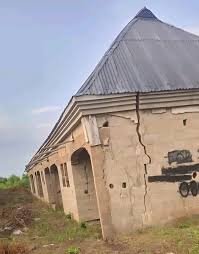
Weak or poorly understood soil conditions often lead to uneven settlement. This causes:
Soil testing helps prevent these issues before construction begins.
The safety of any building depends largely on its foundation. If the soil cannot support the load of the structure, the building becomes unsafe.
Soil testing ensures that:
Many people skip soil testing to save money, but this often leads to higher costs later.
Without proper testing, you may face:
Investing in soil testing helps you avoid these costly problems.
Engineering design is based on data, not assumptions.
A soil test provides the data needed for:
Without this data, the entire project becomes guesswork.
Ignoring soil testing can lead to serious consequences:
❌ Weak foundation
❌ Cracks in walls and slabs
❌ Uneven settlement
❌ Structural failure
❌ Building collapse
These risks are avoidable when proper investigation is done before construction.
You can use the best materials and hire the best workers…
But if your foundation is wrong, everything is at risk.
A strong building always starts with a strong foundation — and a strong foundation starts with understanding the soil.
At Arch-Tech Nigeria Limited, we believe that every successful project starts with proper planning and investigation.
We provide:
We don’t assume.
We analyze, design, and build with precision.
Soil testing is not an extra cost — it is a necessary investment in the safety and durability of your building.
Before you build, take the right step:
👉 Understand your soil
👉 Design properly
👉 Build with professionals
Because a building is only as strong as the ground it stands on.
May 01 - 2026
Apr 14 - 2026
Apr 12 - 2026
Apr 09 - 2026